 services@jtchip.com
Welcome to JT ELECTRONIC (HK) COMPANY LIMITED
services@jtchip.com
Welcome to JT ELECTRONIC (HK) COMPANY LIMITED
Ⅰ. Introduction of Vehicle-to-Grid Technology
The power system has evolved into the smart grid (SG), with numerous new communication capabilities added to it as a result of the adoption of modern information and communication technology. One such function is vehicle-to-grid (V2G), which makes electric vehicle (EV) transportation effective and efficient, along with making the appropriate choices. The vehicle-to-grid technology enables the interchange of energy, appropriate data, and extra power grid facilities.
To transmit data and energy between battery electric vehicles and the power grid, a bidirectional technique is used. It provides the power system with additional services, including reactive power compensation, load balancing, peak load reduction, and spinning reserves. Additionally, the smart grid's design allows for features like vehicle-to-home (V2H), vehicle-to-vehicle (V2V), and grid-to-vehicle (G2V), all of which are crucial.
To share power and useful data between electric vehicles, smart homes, devices, and batteries, vehicle-to-home technology will be used. Electricity from the nearby charging station, as well as local electricity, will be shared via vehicle-to-grid technology. Vehicle-to-grid technology is divided into unidirectional and bidirectional categories. Both types of vehicle-to-grid can offer a wide range of additional services, such as peak load shaving and load leveling, as part of improving energy efficiency for power grids.
Table 1 provides an example comparison of the power flow profiles for unidirectional and bidirectional vehicle-to-grid technologies. This technology employs optimization strategies to optimally charge or discharge electricity from the grid and vice versa.
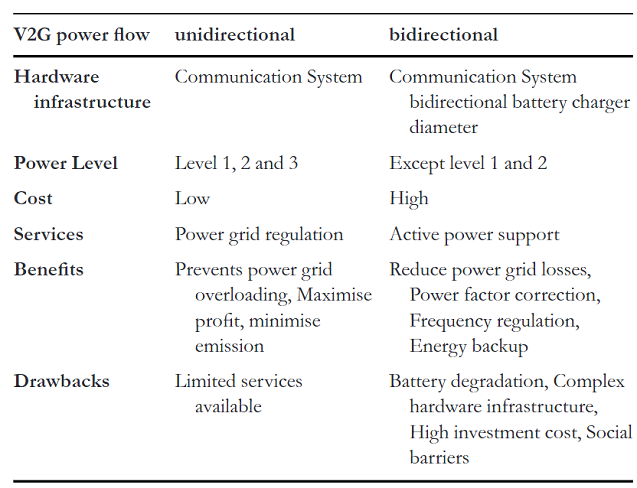
Table 1. Comparison between unidirectional and bidirectional vehicle-to-grid power flows Source: IET Renewable Power Generation
Optimization techniques
A complex vehicle-to-grid system is produced by the integration of a large number of electric vehicles into the power grid and several non-linear variables. The massive number of electric vehicles and grid integration make it difficult to provide the necessary services to all systems inside the integrated network. The previous issue will be impossible to solve when power consumption is at its highest. Therefore, these systems require a tool that can optimize the requirements of each system participant.
Therefore, an optimization strategy is crucial in these kinds of circumstances. Traditionally, linear and quadratic programming have been used to accomplish this strategy. Numerous non-linear and uncertain variables, as well as a significant volume of real-time computational resources, are present in this programming. The genetic algorithm (GA) and particle swarm optimization (PSO), the most widely used and practical optimization approaches, are covered below.
Genetic Algorithm
It is a method of evolutionary analysis that relies on a genetic chromosome in a living thing. The objective function runs, assesses the score for the developing chromosomes (or output for the smart grids), and repeats until the intended output condition is either met or fulfilled. The process ends when the requirement is satisfied, and the best result is given. Fig. 1 depicts the genetic algorithm flowchart.
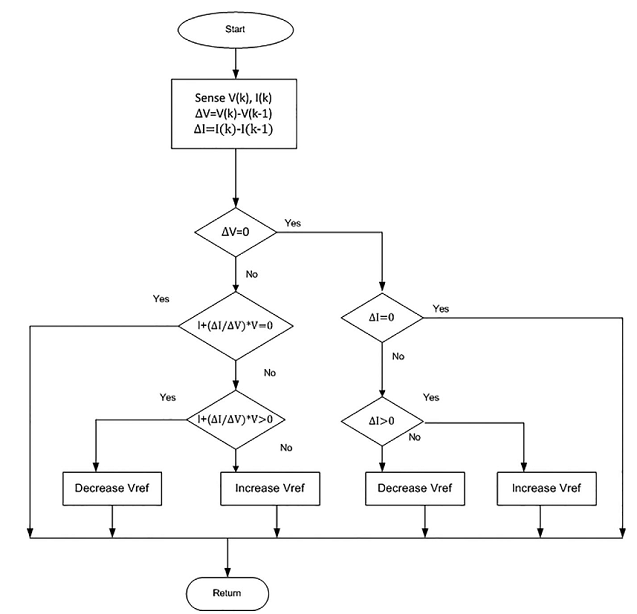
Fig. 1. Flowchart of a genetic algorithm. Source: IET Renewable Power Generation
For grid stability and optimal delivery, the genetic algorithm is most frequently utilized. It is founded on the core concept that the population's fittest member has the best chance of surviving. To find the best parameter setting, it uses the objective information function. In addition to several other factors, the genetic algorithms use the non-linear algebraic technique as the goal function for the load flow application.
The minimal loss is represented by a power loss penalty. The genetic algorithm adaptive technique processes the data information that is available and keeps track of the power flow within the grid as described in the steps of operation below. Along with the factors listed above, minimizing fuel costs, minimal transmission losses, and economic dispatch are considered when determining the best power flow.
Recommend News

Connect with us

- Email:services@jtchip.com

- Address:Address : Room 02, 21st Floor, Hip Kwan Commercial Building, 38 Pitt Street, Yau Ma Tei, Kowloon, Hong Kong
 JT ELECTRONIC (HK) COMPANY LIMITED
-
Tel
-
Whatsapp