 services@jtchip.com
Welcome to JT ELECTRONIC (HK) COMPANY LIMITED
services@jtchip.com
Welcome to JT ELECTRONIC (HK) COMPANY LIMITED
One of the consumer goods categories with the greatest rate of growth is wearables, which heavily rely on electronics miniaturization. Customers are becoming more and more reliant on smartphones and smartwatches that have a wide range of services, including those that measure their daily steps, display health metrics, schedule appointments, send emails, and more.
One of the consumer goods categories with the greatest rate of growth is wearables, which heavily rely on electronics miniaturization. Customers are becoming more and more reliant on smartphones and smartwatches that have a wide range of services, including those that measure their daily steps, display health metrics, schedule appointments, send emails, and more. Finally, there are earphones that produce high-quality stereo sound without cords. Smart glasses with built-in cameras, video, and augmented reality capabilities would soon be available on the market. All of these devices have one thing in common: they are miracles made possible by miniaturization and incredible advancements in design and manufacturing. We need novel strategies to get there because this goes beyond the size reductions enabled by semiconductor device shrinkage. 'SiP', or system in packaging technology, is one of the most effective of the strategies being introduced. Simply said, SiP technology is a sealed package that contains all of an electronic subsystem's active and passive parts, as well as the necessary interconnections. One benefit is that high operating speeds can be attained because the interconnections are brief. Components can also be stacked within the packaging to make the best use of available space, which is essential for wearable electronics. The package is also protected from the outside environment because it is totally sealed. True Wireless Stereo, which is included in the current generation of smart earbuds, is a superb illustration of the SiP technique being successfully applied in wearable technology. Electronic subassembly miniaturization frees up space, allowing designers to fit larger and more powerful batteries without increasing the size of a gadget.
Components of A Smartwatch
A smartwatch is made up of numerous tiny components, the most obvious of which are the watch body and the strap. There is a wide variety of materials that can be used to make watch straps. The body of the watch is made up of several electronic parts such as sensors, semiconductors, batteries, touch screens, and displays. Smartwatches, in contrast to conventional electronic wristwatches, rely heavily on the array of electronic components built into the device. Smartwatches may be compact, but they pack a lot of useful features onto a single device. Radiofrequency boards, Bluetooth boards, Wi-Fi boards, boards for managing electricity, and other sensors or chips are all examples of modules.
This article mainly lists the 7 most used sensor types in smartwatches currently on the market, namely:
1. Accelerometer
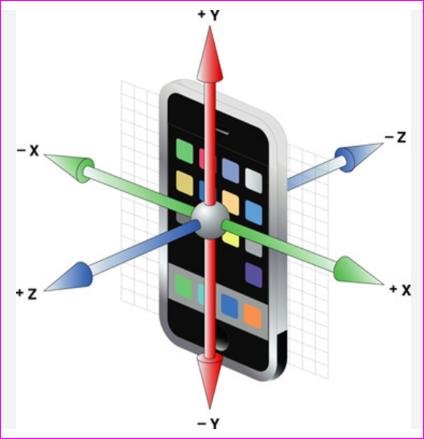
In general terms, an accelerometer can tell if the user is in motion since it measures acceleration, or the rate at which an object's velocity changes. Therefore, it is the sensor of choice for all smartwatches. For example, all Starmax wristwatch series are equipped with accelerometers to measure users’ movements, such as S5, S90 (kids watch), and GTS2.
2. Heart Rate Monitor
A heart rate monitor (HRM), sometimes known as a heart rate sensor, is a device used to monitor and record a person's heart rate and pulse. Nowadays, most smartwatches include this type of sensor incorporated to enable heart rate detection abilities. Starmax included a heart rate sensor in the GTS4 that detects blood flow via photoplethysmography (PPG) to provide accurate readings of the wearer's pulse and heart rate. The heart is a crucial organ that oversees blood flow in the human body. A healthy circulation will deliver the right quantity of blood to all organ parts at an acceptable speed. Thus, alterations in blood volume are strongly linked to pulse rate. Most smartwatches incorporate heart rate sensors that work on this concept to assess the wearer's pulse and heart rate by monitoring blood flow at the wrist.PPG (photoplethysmography) is the most extensively utilized method for heart-rate detection. It is a non-invasive monitoring method that uses optical means to monitor changes in hemoglobin volume. All Starmax smartwatch models, including the S90 (Starmax kids wearable), GTS1, GTS2, and S50, include PPG heart rate sensors. From the spectroscopy context, red and green are opposite colors, so in principle, red plasma will absorb green light. Because of its ability to detect heart rate and pulse by monitoring the variation in the strength of reflected green light, the PPG heart rate monitor is an important sensor.
Gyroscope
Gyroscopes and accelerometers are two kinds of sensors used to gauge the acceleration of an object, but they work similarly. Gyroscopes are used primarily for recording the angle of an object to record its velocity of rotation and direction changes. For a more precise orientation of objects, some smartwatch manufacturers use a combination of accelerometers and gyroscopes for triangulation. Gyroscopes and accelerometers are two types of devices used to gauge the velocity of an item, but they work differently. Gyroscopes are used primarily to track the angle of a thing in order to capture its angular velocity as well as orientation changes. For a more precise orientation of objects, some smartwatch manufacturers use a combination of accelerometers and gyroscopes for triangulation.
Recommend News

Connect with us

- Email:services@jtchip.com

- Address:Address : Room 02, 21st Floor, Hip Kwan Commercial Building, 38 Pitt Street, Yau Ma Tei, Kowloon, Hong Kong
 JT ELECTRONIC (HK) COMPANY LIMITED
-
Tel
-
Whatsapp